Your child starts their homework, gets halfway through an instruction and then asks what they were supposed to do. At school, they miss important details. At home, simple routines turn into a series of reminders.
When a child has auditory processing disorder (APD), ADHD, or both, everyday tasks can demand more effort than adults realise.
The answer isn't always to repeat instructions louder or ask them to concentrate harder. Sometimes, a few practical changes to how information is presented can make daily life easier.
The key is to recognise what your child finds difficult and adjust the support accordingly.
Why APD and ADHD Can Make Everyday Tasks Challenging
Auditory Processing Disorder (APD)
Auditory processing disorder affects how the brain processes auditory information.
A child may hear sounds normally but struggle to:
- Distinguish speech from background noise
- Follow spoken instructions
- Make sense of information delivered quickly
Attention Deficit Hyperactivity Disorder (ADHD)
ADHD affects attention, impulse control and, for some children, activity levels.
A child may find it difficult to:
- Sustain attention
- Organise tasks
- Remember what they intended to do next
The two can occur together, although they are distinct conditions.
Consider a child who is asked to get ready for school. They need to listen to several instructions, remember the sequence and carry them out without getting distracted. If they also struggle to process spoken information, the task becomes even more demanding.
Understanding Your Child's Needs
Support works best when it addresses the child's actual difficulties rather than treating every missed instruction as an attention problem.
Make Instructions Easier to Follow
Long verbal instructions can be difficult to manage, particularly when a child is distracted or has trouble processing spoken information.
Instead of giving several instructions at once, break the routine into smaller steps.
Several instructions delivered together can be difficult to process, remember and complete.
Try giving one or two instructions at a time. Pause to let your child respond before adding more.
For children with APD, this can reduce the amount of spoken information they need to process at once. For children with ADHD, shorter instructions can make it easier to stay focused on the task at hand.
Parent Tip
Avoid turning every instruction into a test. If your child forgets a step, calmly remind them and help them return to the task.
Use Visual Reminders Instead of Relying on Memory
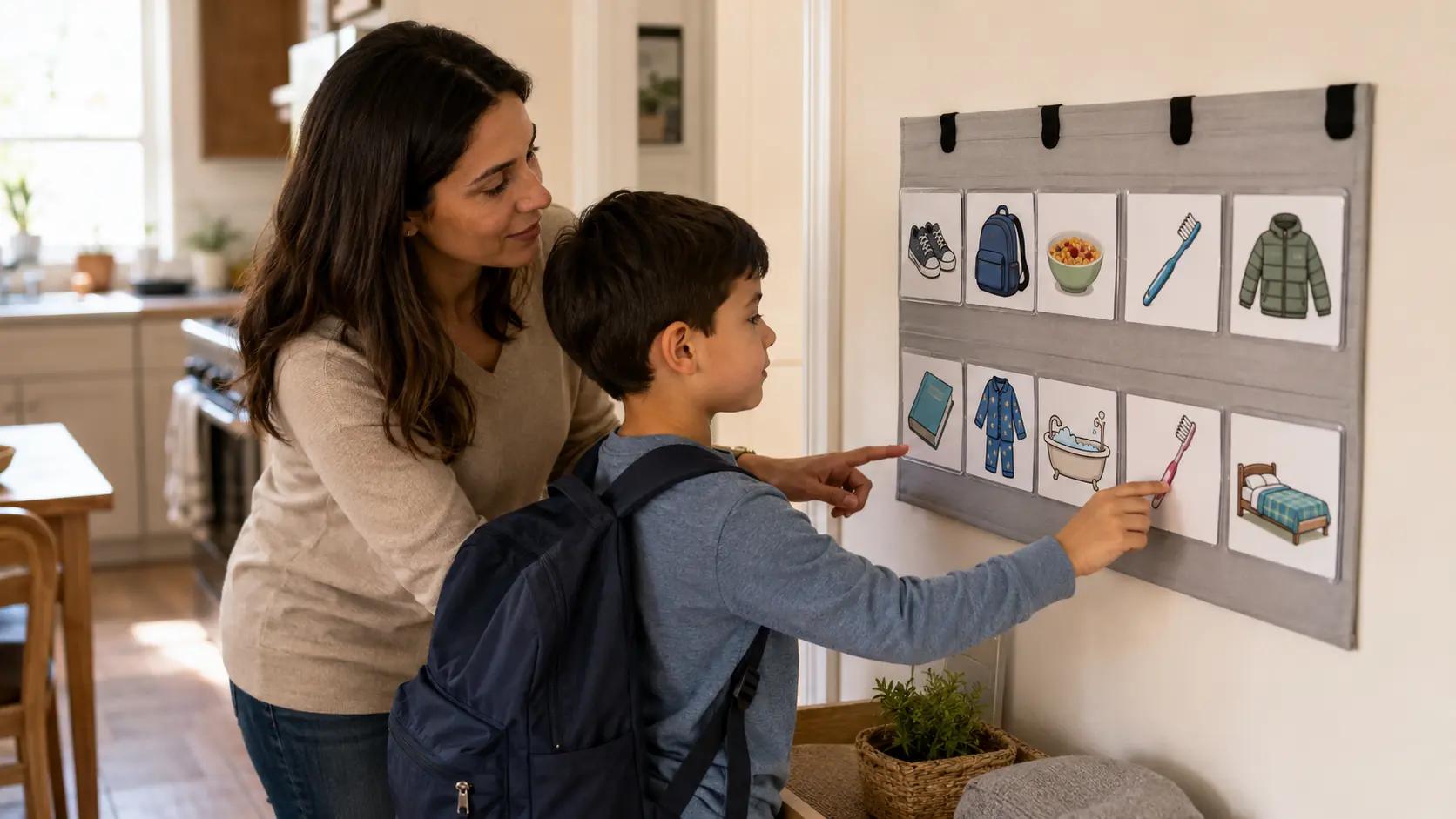
A written checklist, picture schedule or simple morning routine chart can take pressure off both the child and the parent.
For example, a school-morning checklist might include getting dressed, brushing teeth, packing lunch and putting on shoes.
My School Morning Checklist
One little step at a time!
The child can check each step independently instead of relying on repeated verbal reminders.
Visual support can be particularly useful when a child finds spoken information difficult to process or struggles with organisation and working memory.
Keep It Simple
A chart with too many instructions can become another source of distraction. Start with a few manageable steps and adjust as your child becomes more confident.
Reduce Background Noise When Listening Matters
Not every environment can be made quiet, but small changes can help.
At Home
Turn off the television when discussing homework or giving important instructions.
During Conversations
Avoid giving important instructions while another conversation is happening nearby.
At School
Consider seating arrangements away from noisy equipment or busy walkways to help the child access the teacher's voice.
This is particularly relevant for children with APD, who may find it harder to follow speech when competing sounds are present.
Children with ADHD may also benefit from fewer distractions, although the most helpful environment will depend on the individual child.
The aim isn't to eliminate every sound. It is to make important information easier to access.
Give Your Child Time to Respond
Some children need a little longer to process a question, organise their thoughts or shift their attention to a new task.
If you ask a question and immediately repeat it, rephrase it and add another instruction, your child may have even more to process.
A Simple Approach to Try
Ask once, allow a short pause and give them a chance to respond.
If they haven't understood, try simplifying the wording rather than increasing the volume.
This small adjustment can make conversations less frustrating and gives you a better chance of seeing what your child can do without unnecessary pressure.
A Little Patience Can Go a Long Way
Allow your child the time they need to understand and respond before offering another instruction.
Build Predictable Routines
Children who struggle with attention, organisation or auditory processing may find frequent changes difficult to manage.
Predictable routines reduce the need to work everything out from scratch.
A Place for Everything
Keep everyday items such as school bags, shoes and homework materials in consistent places.
Consistent Daily Sequences
Use the same sequence for bedtime and morning preparation so your child knows what to expect.
Prepare for Changes
Give advance notice when a familiar routine is going to change.
Something as Simple as...
“We're leaving in ten minutes.”
A simple reminder can help your child prepare for the transition.
For children with ADHD, routines can provide external structure. For children with APD, familiar sequences can reduce reliance on processing multiple new verbal instructions.
Flexibility still matters. A routine should help your child, not become another reason for conflict when something unexpected happens.
Work With Your Child's School
Support is more effective when home and school approaches complement each other.
Speak with your child's teacher about the situations in which they struggle most.
Questions Worth Asking Your Child's Teacher
- Do they miss instructions during group activities?
- Do they have trouble starting independent work?
- Are they frequently distracted by nearby activity?
- Which adjustments seem to help them participate?
Helpful Classroom Adjustments May Include
Written Instructions
Provide written or visual instructions alongside spoken information.
Check Understanding
Check that key information has been received and understood.
Smaller Tasks
Break larger assignments into smaller, more manageable steps.
Quieter Learning Spaces
Provide a quieter place to complete certain activities when appropriate.
Rather than assuming that a child isn't trying, look at what makes the task difficult and which adjustments help them participate.
Regular communication between parents, teachers and relevant professionals can help identify what is working and what needs changing.
Recognise Effort, Not Just Results
A child who repeatedly forgets instructions or struggles to finish tasks may hear a lot of criticism throughout the day.
Over time, they may start to think they are careless, difficult or simply not good at schoolwork.
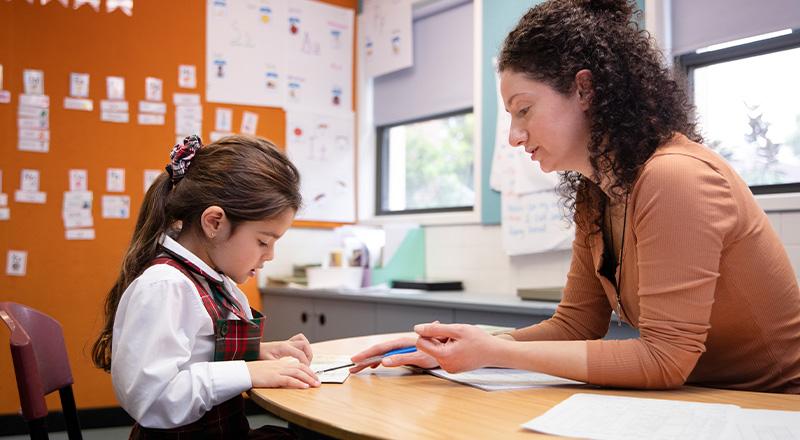
Make a point of recognising effort and progress.
Using a Checklist
Recognise when your child completes a routine independently.
Asking for Clarification
Acknowledge when your child asks for help understanding an instruction.
Returning to a Task
Notice when your child returns to an activity after becoming distracted.
Specific feedback is more useful than general praise.
This tells the child exactly what they did well.
Celebrate the Small Wins
Support should help children build independence and confidence, not make them feel that they are constantly being corrected.
A Perspective From Françoise Nicoloff, Director of Tomatis® Australia
Children who struggle with listening may already be working hard to manage everyday demands. Changing how instructions are delivered can sometimes be more useful than simply asking them to try harder.
Françoise Nicoloff offers this perspective:
When a child finds listening difficult, we need to look at the demands of the situation as well as the child’s response. Small changes in the way we communicate can make a meaningful difference to everyday experiences.
This is a useful principle for parents and teachers alike. It shifts the focus from what a child appears to be doing wrong towards the conditions that may help them participate more comfortably.
Can the Tomatis® Method Be Part of the Support Plan?
The Tomatis® Method is a listening-based approach that uses specially modified music and voice recordings delivered through specialised equipment.
It focuses on auditory stimulation and the listening process.
Families exploring this approach should discuss their child's individual needs and ask what the programme involves, how progress is monitored and what outcomes can reasonably be expected.
Auditory Stimulation
Specially modified music and voice recordings are delivered through specialised listening equipment.
Individual Needs
Explore your child's listening experiences, challenges and individual circumstances with an appropriate professional.
Monitoring Progress
Discuss how progress is monitored and what outcomes can reasonably be expected from a listening programme.
Part of a Broader Support Plan
The Tomatis® Method should not be viewed as a replacement for appropriate assessment, ADHD management, educational adjustments or support for auditory processing difficulties.
Evidence and suitability should be considered carefully, particularly when a child has more than one area of need.
Françoise Nicoloff shares this perspective on an individualised approach:
Every child has their own listening experiences and challenges. The important thing is to look at the individual child and consider what kind of support is appropriate for them.
For families, this means avoiding a one-size-fits-all approach. Practical strategies at home and school, alongside guidance from appropriate professionals, can help build a support plan around the child's needs.
Small Changes Can Make Daily Life Easier
Supporting a child with APD, ADHD or both doesn't require changing everything at once.
Start with one recurring difficulty.
Shorten Instructions
Give your child one manageable step at a time.
Introduce a Visual Checklist
Make everyday routines easier to follow and remember.
Reduce Background Noise
Create a more suitable environment during homework or important conversations.
Notice whether the change helps, and adjust from there.
If your child's difficulties are affecting learning, communication or everyday routines, discuss them with appropriate professionals. A comprehensive assessment can help clarify which factors are contributing and what support may be useful.
Every Child Deserves the Right Support
The goal isn't to make a child fit every situation without difficulty. It's to help them develop skills and access the support they need to manage everyday life.
Every Child's Listening Journey Is Different
Is your child experiencing difficulties with listening, attention, learning or everyday routines?
If listening difficulties are part of your child's experience, you may wish to learn more about the Tomatis® approach and how it fits alongside other forms of support.
Book a free 20-minute Discovery Call with our Tomatis® Australia team. We'd love to hear your concerns, answer your questions and help you explore whether the Tomatis® Method may be suitable for your child.
Book Your Free 20-Minute Discovery Call Learn More About the Tomatis® MethodSmall steps towards understanding your child's individual needs.