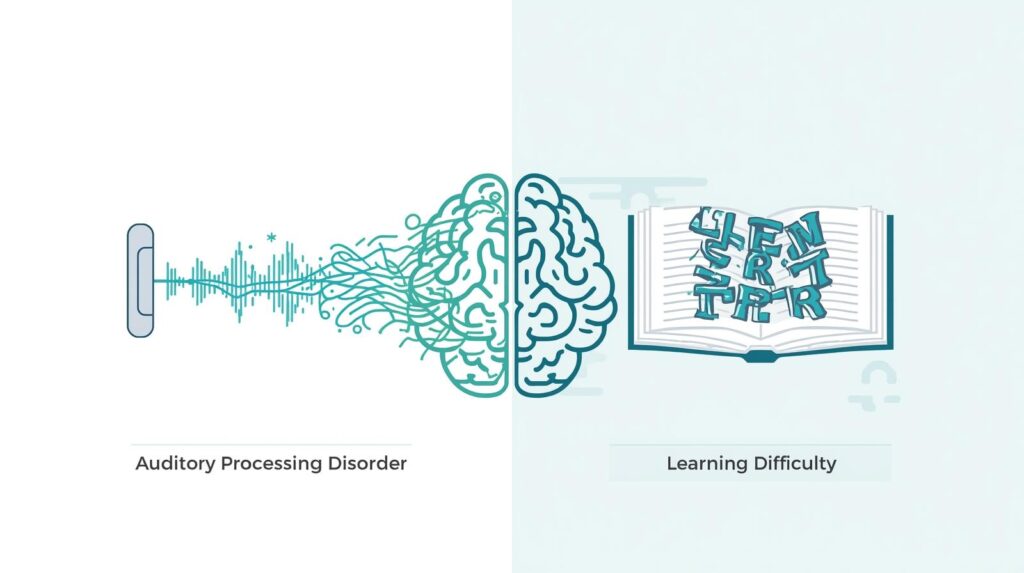
Why Auditory Processing Disorder Is Often Misdiagnosed as a Learning Difficulty

Picture this: Your child sits in a bright classroom in Melbourne, surrounded by other students who seem to grasp instructions effortlessly. The teacher explains the maths problem clearly, at least it seems clear to everyone else. But your child? They’re lost. Not because they lack intelligence. Not because they aren’t trying hard enough. But because the words themselves never quite make it from their ears to meaningful understanding in their brain.

This is the invisible struggle faced by thousands of children with Auditory Processing Disorder (APD). Yet alarmingly, most of these children will never receive an accurate diagnosis. Instead, they’ll be labelled with learning difficulties, prescribed interventions that don’t address the root cause, and left wondering why they can’t seem to “get it” like their peers do.

The confusion between auditory processing disorder and learning difficulties isn’t simply an academic distinction, it’s a critical misunderstanding that affects how children are supported, what therapies they receive, and ultimately, whether they overcome their challenges or struggle throughout their educational journey. When a child with APD is misdiagnosed as having a general learning disability, they may spend years in interventions that, whilst well-intentioned, completely miss the mark. 

Why does this misdiagnosis happen so frequently? The answer lies in the overlapping symptoms, the lack of awareness amongst people and even some healthcare professionals, and the subtle nature of auditory processing difficulties that can masquerade as attention problems, comprehension issues or intellectual limitations.

In this blog, we’ll uncover why auditory processing disorder in Australia and worldwide remains one of the most commonly misidentified conditions affecting children’s learning. 

Understanding Auditory Processing Disorder: More Than Just Hearing Problems

What Is Auditory Processing Disorder?

Auditory Processing Disorder is a neurological condition that affects how the brain processes and interprets sounds, despite normal hearing ability. Think of it this way: the ears work perfectly, transmitting sound signals to the brain, but something goes awry in how the brain makes sense of those signals.

Children with APD can hear sounds clearly, they’ll pass a standard hearing test with flying colours but they struggle to:

  • Distinguish between similar sounds (“cat” versus “cap”)
  • Filter important sounds from background noise (the teacher’s voice versus classroom chatter)
  • Remember and follow multi-step verbal instructions
  • Process speech at normal conversational speed
  • Understand speech in less-than-ideal acoustic environments
  • Locate where sounds are coming from

This neurological lag creates a cascade of challenges that, on the surface, look remarkably similar to learning difficulties.

The Invisible Nature of APD

What makes auditory processing disorder particularly insidious is its invisibility. A child with poor vision squints at the board, triggering concern and an eye test. A child with a mobility issue receives immediate attention. But a child struggling to process auditory information? They often appear inattentive, disobedient, or intellectually limited none of which reflects their true capacity.

These children develop coping mechanisms that further mask the real issue. They become expert lip readers. They watch other students for cues about what to do next. They nod along even when they haven’t understood. To untrained observers, they simply seem like students who “aren’t trying hard enough” or who have broader learning difficulties. 

If your child presents signs of Auditory Processing Disorder, claim your 20 minutes FREE consultation valued at $125 with our expert

The Overlap: Why Auditory Processing Disorder And Learning Difficulties Seem Similar

Shared Symptoms Create Diagnostic Confusion

The tragedy of misdiagnosis stems from the remarkable overlap between symptoms of auditory processing disorder and learning difficulties in general. Consider these common presentations:

Reading Difficulties: Both APD and dyslexia can cause reading struggles. However, the mechanisms differ fundamentally. A child with dyslexia has difficulty connecting letters to sounds and recognising written words. A child with APD struggles because they never properly learned to distinguish the sounds in the first place. If you can’t hear the difference between “bat” and “pat,” how can you be expected to read or spell them correctly?

Attention and Focus Problems: Children with APD frequently receive ADHD diagnoses. They appear inattentive during class, fail to follow instructions, and seem easily distracted. But the underlying cause is entirely different. These children aren’t struggling with impulse control or hyperactivity, they’re mentally exhausted from the constant effort of trying to decode speech in noisy environments.

Imagine trying to follow a lecture in a foreign language you’re just learning, whilst someone plays loud music in the background. How long could you maintain focus? This is the daily experience for children with APD in typical classrooms.

Poor Academic Performance: When children consistently underperform despite adequate intelligence, the default assumption is often “learning disability.” Teachers notice they don’t complete assignments properly, misunderstand instructions, and struggle with dictation or spelling tests. The learning disability therapy prescribed focuses on study skills, time management, and subject-specific tutoring none of which address the auditory foundation underlying the struggles.

Behavioural Issues: Frustration manifests differently in different children. Some withdraw, becoming quiet and disengaged. Others act out, developing a reputation as “difficult” students. These behavioural presentations often lead to psychological assessments and behavioural interventions, whilst the auditory processing difficulties remain completely unrecognised.

The Assessment Gap in Schools

Another critical factor contributing to misdiagnosis involves how learning difficulties are identified in educational settings. Standard psychoeducational assessments focus on cognitive abilities, academic achievement, and sometimes attention. These assessments can identify that a child is struggling, but they rarely pinpoint auditory processing as the underlying cause.

Most school-based assessments simply don’t include comprehensive auditory processing evaluation. Even when hearing tests are conducted, these typically measure only hearing sensitivity (audiometry), not how the brain processes auditory information. A child can have perfect hearing yet profound auditory processing difficulties.

The Consequences of Misdiagnosis

Wasted Time and Resources

When auditory processing disorder is misdiagnosed as a general learning difficulty, children often undergo years of interventions that provide minimal benefit. Learning disability therapy designed for children with cognitive processing issues or intellectual delays won’t help a child whose primary challenge is decoding auditory information.

This isn’t to say that educational support is harmful, extra attention and smaller class sizes often help children with APD cope better. But without addressing the fundamental auditory processing difficulties, progress remains frustratingly limited.

Emotional and Psychological Impact

Perhaps more damaging than wasted intervention time is the psychological toll of misdiagnosis. Children with APD are often incredibly intelligent, but their struggles with following instructions and processing verbal information lead teachers, parents, and even the children themselves to question their intelligence.

When children finally receive an accurate APD diagnosis, many families describe it as a revelation suddenly, the struggles make sense. The child isn’t lazy, defiant, or intellectually limited. Their brain is simply wired to process auditory information differently, and with appropriate support, they can thrive.

Academic Trajectory Altered

Early misdiagnosis can fundamentally alter a child’s educational trajectory. Students incorrectly identified as having general learning difficulties may be placed in modified curriculum tracks, limiting their academic opportunities. They may be excluded from advanced programmes despite having the intellectual capacity to succeed.

When auditory processing disorder in Australia goes unrecognised, bright students end up in educational pathways that don’t reflect their true potential. Years later, doors that should have remained open have quietly closed.

Accurate Diagnosis: The Path to Appropriate Auditory Processing Disorder Therapy

Comprehensive Assessment Makes All the Difference

Accurate diagnosis of auditory processing disorder requires specialised assessment by professionals trained in APD evaluation, typically audiologists with specific expertise in central auditory processing. These assessments go far beyond standard hearing tests.

A comprehensive APD assessment typically includes:

Dichotic Listening Tests: Different sounds are presented simultaneously to each ear, evaluating how well the brain integrates auditory information from both sides.

Temporal Processing Tests: These assess the brain’s ability to process the timing and sequencing of sounds crucial for understanding speech.

Auditory Pattern Recognition: Can the child recognise and reproduce patterns of sounds? This reveals how well the brain organises auditory information.

Speech-in-Noise Testing: How well can the child understand speech when background noise is present? This reflects real-world listening challenges.

Binaural Integration Tests: These evaluate how well the two sides of the brain work together to process auditory information.

The assessment also includes detailed case history, classroom observation reports, and often collaboration with speech pathologists and educational psychologists to build a complete picture.

Distinguishing APD from Other Conditions

Skilled diagnosticians don’t just identify APD, they also differentiate it from conditions with overlapping symptoms. Some children have both APD and another condition (such as ADHD or dyslexia), requiring integrated approaches. Others have been misdiagnosed entirely, and the APD diagnosis reframes everything.

Key distinctions include:

APD versus ADHD: Children with ADHD struggle with attention across all sensory modalities and situations. Children with APD specifically struggle in auditory-demanding situations, but may have excellent visual attention and focus during hands-on activities.

APD versus Dyslexia: Both affect reading, but APD impacts reading through poor phonological awareness (difficulty hearing sound differences), whilst dyslexia involves difficulty connecting visual symbols to sounds even when those sounds are clearly perceived.

APD versus Intellectual Disability: Children with APD typically have normal or above-average intelligence on non-verbal measures. Their struggles are specific to auditory processing, not general cognitive ability.

APD versus Language Disorder: While both affect language, children with language disorders struggle with language formulation and grammar, whereas children with APD struggle specifically with processing and interpreting auditory input.

These distinctions aren’t academic, they directly determine what interventions will help.

If your child presents signs of Auditory Processing Disorder, claim your 20 minutes FREE consultation valued at $125 with our expert

Effective Auditory Processing Disorder Therapy: A Different Approach

Targeted Interventions for APD

Once accurately diagnosed, children with APD benefit from interventions specifically designed to address auditory processing difficulties, approaches quite different from standard learning disability therapy.

Auditory Training Programmes: Computer-based programmes like Fast ForWord or Earobics provide intensive practice in distinguishing sounds, processing speech at varying speeds, and filtering relevant information from background noise. These directly target the auditory processing weaknesses identified in assessment.

Environmental Modifications: Sometimes the most effective intervention involves changing the listening environment. This might include:

  • Preferential seating (front and centre in classrooms)
  • Reducing background noise during learning
  • FM systems or soundfield amplification in classrooms
  • Visual supports accompany verbal instructions
  • Extra time for processing verbal information

Compensatory Strategies: Teaching children with APD to advocate for their needs and use effective strategies:

  • Asking for instructions to be repeated or clarified
  • Taking notes or recording lessons
  • Using visual organisers and written instructions
  • Breaking complex auditory information into smaller chunks

Speech-Language Therapy: When APD affects language development, speech pathologists provide targeted therapy focusing on phonological awareness, auditory memory strategies, and improving language processing skills.

The Tomatis® Method as Auditory Processing Disorder Therapy

Many Australian families also explore the Tomatis® Method as an intervention for auditory processing disorder. This approach uses specially modified music to retrain the brain’s auditory processing, addressing fundamental auditory processing difficulties rather than simply teaching compensation strategies.

The Tomatis® Method works by stimulating neuroplasticity, the brain’s ability to form new neural connections, specifically targeting the auditory pathways that aren’t functioning optimally in children with APD.

Moving Forward: Recognition and Advocacy

Increasing Awareness of Auditory Processing Disorder in Australia

Addressing the misdiagnosis of APD requires systemic change. Australian educators, paediatricians, and even some audiologists need better training in recognising the signs of auditory processing disorder. When teachers understand that a child who seems inattentive might actually be struggling to process what they’re hearing, the conversation changes entirely.

Parent advocacy groups across Australia are working to increase awareness of APD and push for routine screening in schools. Some are calling for APD assessment to be included in standard psychoeducational evaluations, rather than requiring families to seek specialist assessment independently. 

Questions Parents Should Ask

If your child has been diagnosed with learning difficulties but interventions aren’t working, consider these questions:

  • Has a comprehensive auditory processing assessment been conducted?
  • Does your child struggle more in noisy environments than quiet ones?
  • Do they frequently ask for repetition or say “what?” even though their hearing tests are normal?
  • Do they perform better on visual tasks than auditory ones?
  • Have multiple interventions for “learning disability” yielded minimal progress?

If you answered yes to several of these questions, pursuing assessment by an audiologist specialising in auditory processing disorder in Australia may be worthwhile.

The Right Diagnosis Changes Everything

Accurate diagnosis isn’t about labels, it’s about understanding. When a child with auditory processing disorder finally receives the correct diagnosis, everything shifts. The interventions become targeted and effective. The educational environment adapts appropriately. Most importantly, the child understands that they’re not “less than” their peers, they simply process auditory information differently.


Conclusion: The Critical Importance of Accurate Diagnosis

The misdiagnosis of auditory processing disorder as general learning difficulties isn’t simply a clerical error, it’s a profound misunderstanding that affects thousands of Australian children’s educational trajectories and self-concepts. When we fail to recognise that a child’s struggles stem from how their brain processes sound rather than general cognitive limitations, we prescribe solutions that don’t address the actual problem.

The path to helping children with APD begins with an accurate diagnosis. When we finally see what’s truly happening in their auditory processing system, we can provide the specific support they need, not generic learning disability therapy, but targeted interventions addressing how they hear and process the world around them. That precision makes all the difference between years of struggle and a child who finally, truly, thrives.

[This article provides general information about auditory processing disorder and learning difficulties. It is not intended as a substitute for professional assessment and diagnosis. If you suspect your child may have APD, consult with a qualified audiologist specialising in auditory processing assessment.]

Françoise Nicoloff
Official Representative of Tomatis Developpement SA in Australia, Asia and South Pacific, Director of the Australian Tomatis® Method, Registered Psychologist, Certified Tomatis® Consultant Senior, Tomatis® International Trainer and Speaker, Co-author of the Listening Journey Series, 47 Years of Experience, Neurodiversity Speaker

Leave a Reply

Your email address will not be published. Required fields are marked *

Fill out this field
Fill out this field
Please enter a valid email address.
You need to agree with the terms to proceed